Navigating the world of clothing sizes can feel like a game of Twister—confusing and often hilarious. When it comes to converting kids’ sizes to adult clothing, it’s a whole new level of puzzling. Parents often find themselves scratching their heads, wondering if a size 10 in kids is more like a size small or a medium in adults. Spoiler alert: it’s not always straightforward!
Understanding Kids’ Sizes
Understanding kids’ clothing sizes is crucial for making correct conversions to adult sizes. Many parents struggle with this due to variations in metrics and fit.
The Importance of Proper Fit
Proper fit significantly impacts comfort and mobility. Clothes that fit well help children engage in activities without restrictions. Ill-fitting clothes can lead to discomfort, making children less likely to wear them. Selecting the right size provides confidence and promotes a positive self-image. Properly fitting clothing often leads to longer usage periods, as well-fitting items endure through growth spurts.
Different Size Standards
Different brands adopt unique size standards, complicating the conversion process. For instance, some brands categorize sizes by numeric values while others use descriptors like small or large. The age and height of children also influence size categories, as not all brands align their sizes with age groups. Parents must consult size charts to ensure accurate conversions from kids’ sizes to adults. Considering these variations is vital for finding comfortable, well-fitting clothing for children transitioning to adult sizes.
Conversion Chart for Kids’ Sizes to Adults
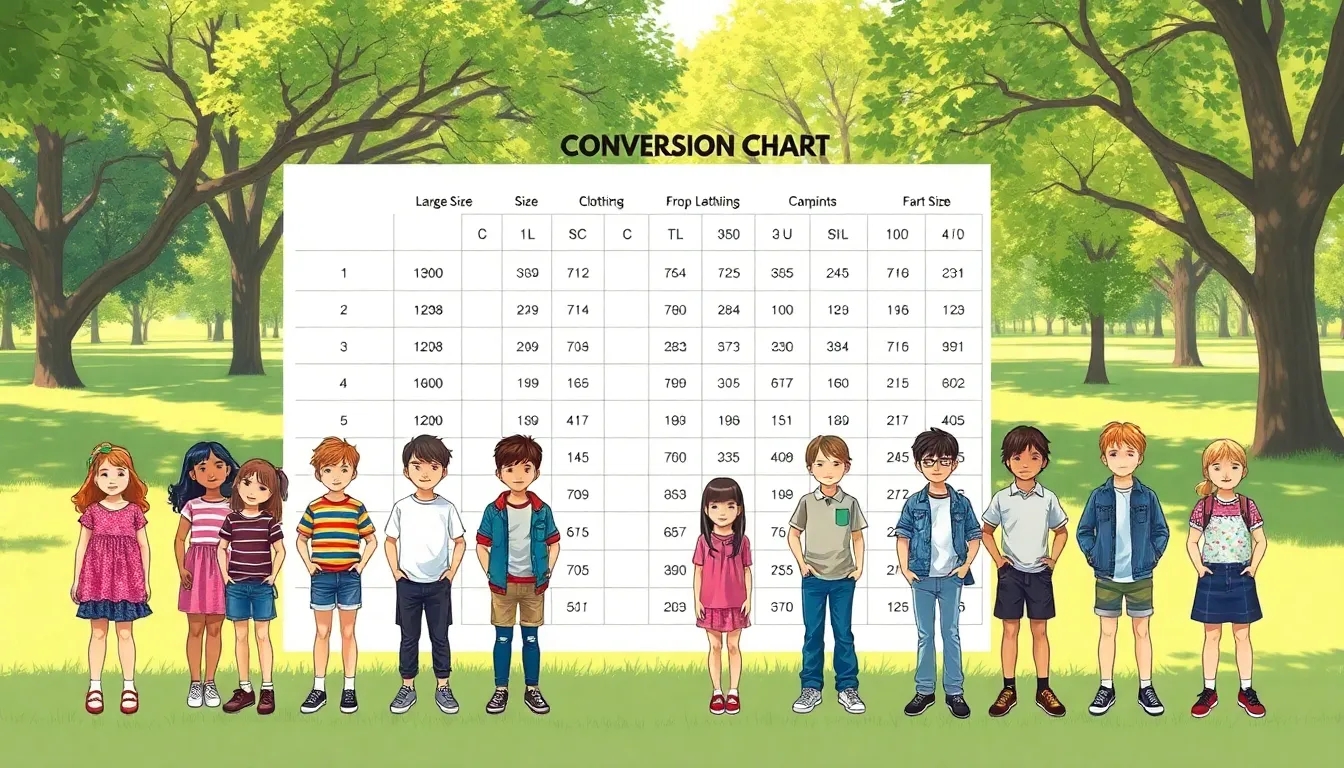
Understanding the conversion from kids’ sizes to adult sizes simplifies shopping for clothing. This chart provides a reliable reference for parents seeking appropriate fits for their children transitioning to adult clothing.
Common Size Equivalents
Kids’ clothing sizes typically range from 2T to 16 in the U.S. Adults sizes generally start from small (S) to extra large (XL). Here’s a breakdown of common size equivalents:
| Kids’ Size | Adult Size |
|---|---|
| 4T | S |
| 5 | S |
| 6 | M |
| 7 | M |
| 8 | L |
| 10 | L |
| 12 | XL |
| 14 | XL |
| 16 | XXL |
Size equivalents can vary by brand, so checking each brand’s specific charts may provide the best results. Variations in fit also exist based on clothing styles and types.
How to Use the Chart
To use the conversion chart effectively, start by measuring the child’s height and weight. Next, refer to the chart to find the corresponding adult size. Comparing the child’s measurements with the chart helps identify which adult size fits best.
When trying on adult clothing, pay attention to the fit. Some styles may run larger or smaller than anticipated. Consider the activities planned with the clothing; certain styles may enhance comfort when worn. Having clear expectations about size ensures a better shopping experience.
Factors to Consider When Converting Sizes
Converting kids’ sizes to adults’ sizes involves several critical factors. Awareness of these factors ensures accurate and comfortable fit.
Fabric and Style Differences
Different fabrics can significantly affect sizing. For instance, stretchy materials often allow more flexibility compared to rigid fabrics. Children’s clothing typically features designs that cater to active play, prioritizing ease of movement. In contrast, adult apparel might focus on style and trend, presenting a more fitted look. Consider the fabric composition when transitioning between sizes. Clothing made from cotton blends may drape differently than polyester blends. Analyze the cut and style differences between brands, as they can affect fit and comfort. Try to identify the fabric and styles that suit the child’s preferences while aligning with adult sizes.
Body Shape Variations
Body shape variations play a crucial role in size conversion. Kids often have different body proportions than adults, including waist and hip measurements. While a child may fit into a particular size based on age, the same size may not fit well in adults due to these variations. Assess the child’s growth pattern, as it directly impacts fit. Growth spurts can change body shapes quickly, making previous sizes less suitable. Always measure the child’s torso, waist, and hips for a better fit. Prioritize comfort without sacrificing style, as well-fitted clothing boosts confidence and encourages satisfaction.
Tips for Successful Size Conversion
Finding the right fit during size conversion is vital for comfort and confidence. These tips help streamline the process.
Measuring Your Child Accurately
Start by taking precise measurements of your child’s height, waist, and hips. Use a measuring tape for accuracy. Compare the measurements against the size chart for adult apparel. Consider measuring multiple times to ensure consistency. Record every measurement, as even small differences can impact fit. Keep in mind that kids’ proportions often differ from adults, so measure your child’s torso as well. Adults generally have longer torsos compared to kids. This understanding aids in choosing the most suitable size.
Trying on Before Purchase
Always encourage trying clothes on before making a purchase. Fit can vary significantly across brands and styles. Clothes that fit well enhance comfort during wear and boost confidence. If possible, visit stores that allow trying on garments to assess fit. Even with size charts, actual try-ons help identify discrepancies. Layers, such as t-shirts or thin long-sleeve shirts, will facilitate easier fitting attempts. Observe how the clothing aligns with your child’s natural movement. Prioritize comfort along with style, particularly for active kids. This approach leads to satisfying and functional choices.
Navigating the transition from kids’ sizes to adult clothing can be challenging for parents. By understanding the nuances of sizing and fit, they can make informed decisions that prioritize comfort and style. Utilizing conversion charts and taking accurate measurements are essential steps in this process.
It’s crucial to remember that each brand may have its own sizing standards, making it necessary to try on clothes when possible. This approach not only ensures a better fit but also helps boost a child’s confidence. By focusing on both comfort and style, parents can make the shopping experience enjoyable and satisfying for their growing children.